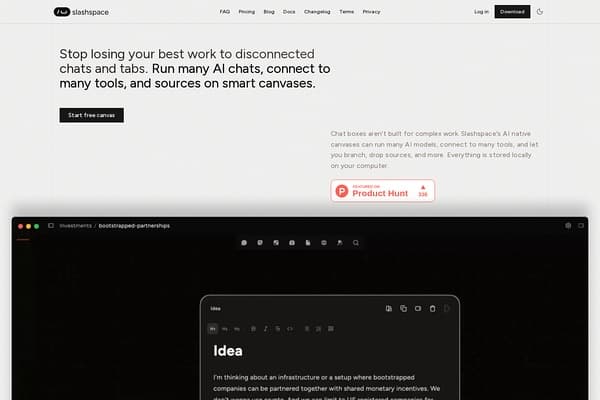
Slashspace
Revolutionize your AI chat experience with Slashspace's infinite canvas!
AI Productivity·freemium
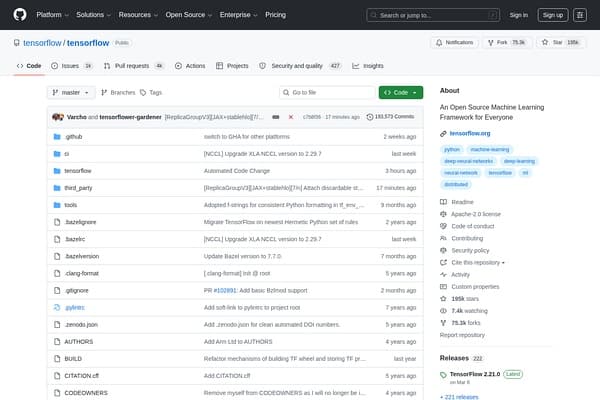
A leading open-source machine learning platform.
TensorFlow is an open-source library developed by Google that simplifies the development of machine learning models. Launched in 2015, it has become a cornerstone in the field of AI due to its flexibility and scalability, enabling users to create sophisticated models that can be deployed on various platforms. TensorFlow supports complex operations across diverse environments—from powerful servers in the cloud to lightweight devices such as smartphones.
The platform features a high-level API (Keras) which allows for quick model prototyping and simplifies intricate tasks, while its low-level APIs provide the flexibility to build custom architectures. It supports a wide range of applications, from vision and speech recognition to autonomous systems. TensorFlow is further enhanced by tools like TensorBoard for model visualization and TensorFlow Hub for reusable model components, making it an indispensable resource for developers and researchers alike.
TensorFlow is completely free to use, with no paid versions. It is open-source, and users can access all functions and tools without a cost.
Pros
Cons
TensorFlow is primarily used for developing and deploying machine learning models across various applications, including deep learning, natural language processing, and computer vision.
While TensorFlow has a steeper learning curve compared to some other frameworks, its high-level APIs like Keras make it accessible for beginners.
Yes, TensorFlow supports deployment on web and mobile platforms through TensorFlow.js and TensorFlow Lite, respectively.
TensorFlow is primarily implemented in Python, but it also has APIs for JavaScript, C++, and Java.
TensorFlow offers extensive documentation, tutorials, and a strong community forum to help users learn and solve problems.
Need to organize your AI tool files?
Managing files from TensorFlow and other tools? The Drive AI automatically organizes, tags, and retrieves all your files with AI.
Try The Drive AI freeRevolutionize your AI chat experience with Slashspace's infinite canvas!
Transform your academic work with AI-powered citation and research tools.
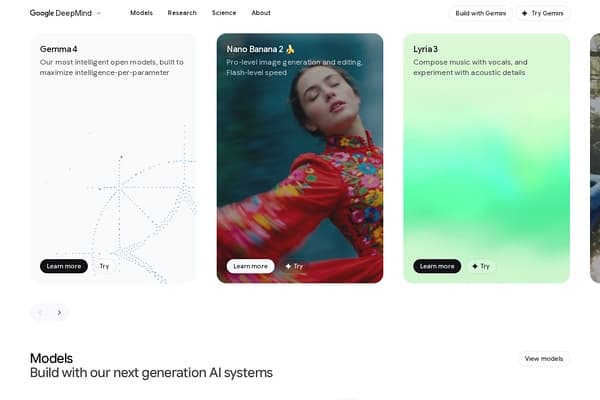
Explore groundbreaking AI solutions with DeepMind's advanced models.